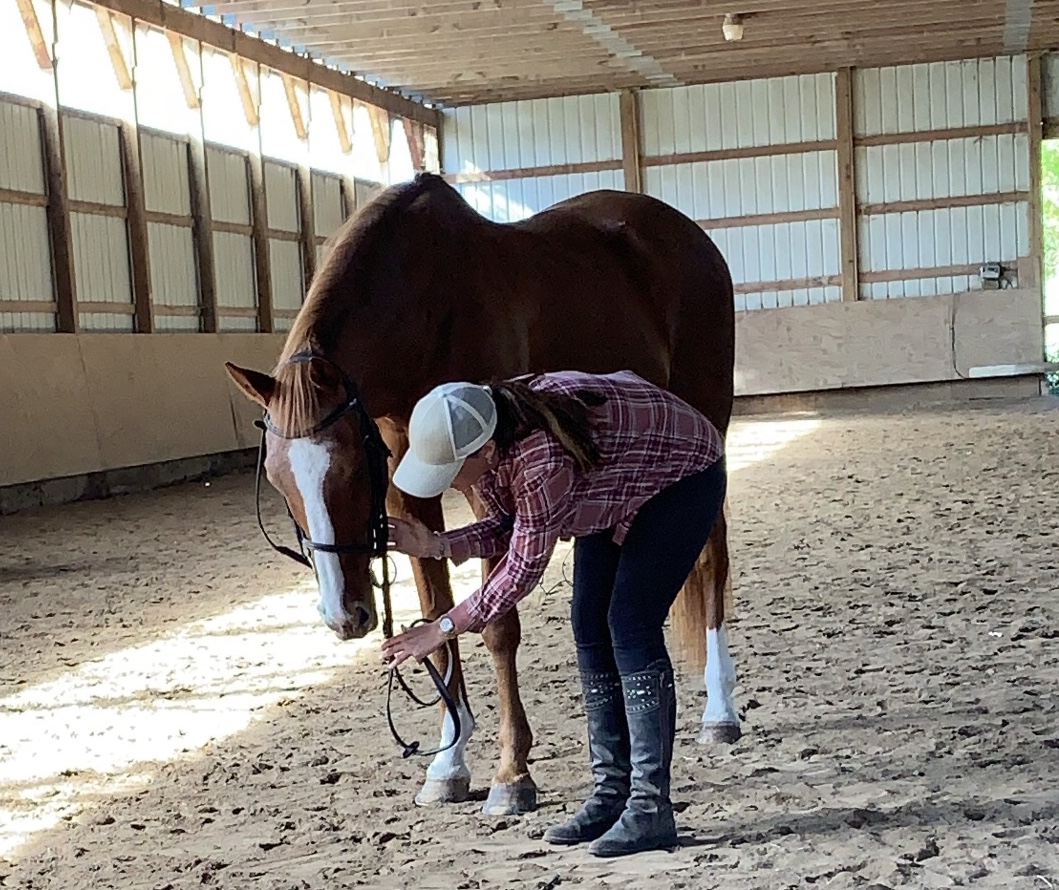
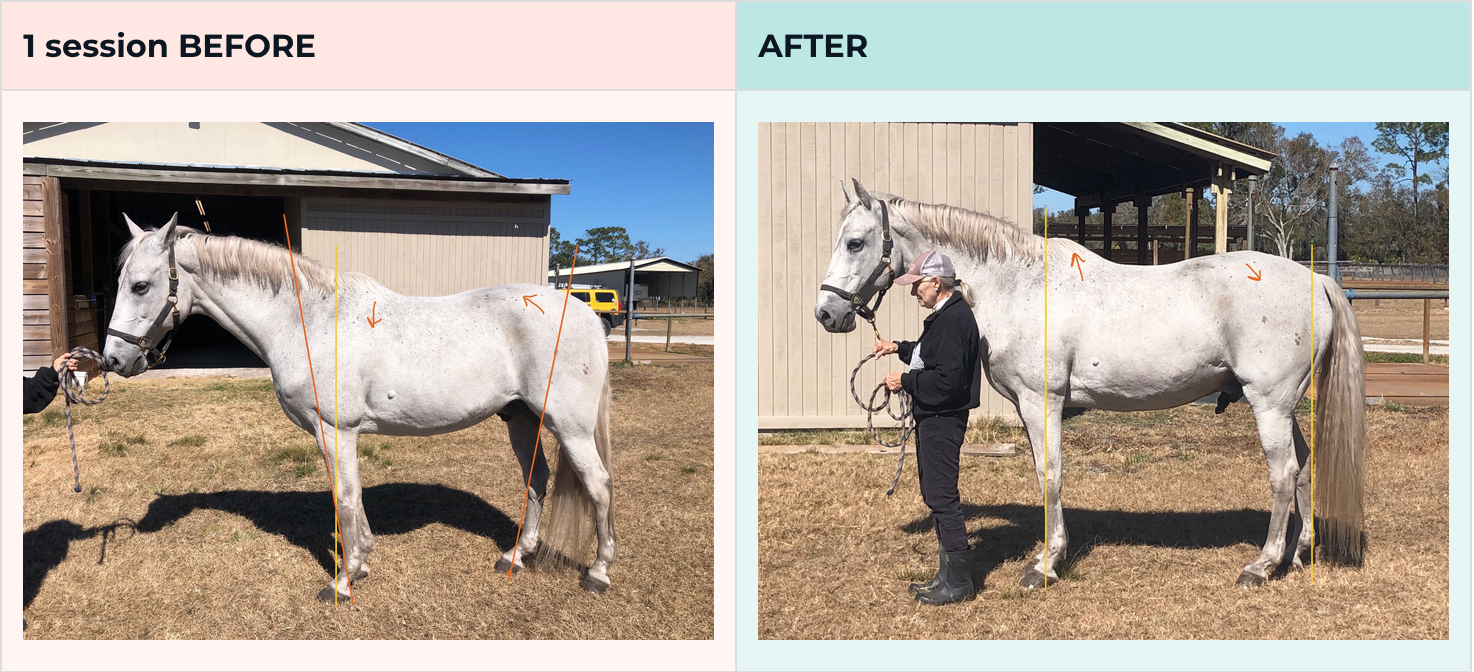
Equine Hanna Somatics is a brain-based method of neuromuscular re-education originally developed by Thomas Hanna for humans and later adapted for horses.
It works at the level of the nervous system to release chronic muscular tension, restore coordination, and improve functional movement. Repeated contraction over time — from asymmetry, compensation, injury, equipment, or normal training demands — becomes “normal” to the brain. Hanna called this motor-sensory amnesia, when the nervous system forgets how to fully release muscles.
Through slow, intentional movements called pandiculations, the horse’s brain relearns how to soften, balance, and coordinate movement. The result is functional freedom, a more supple topline, and a stride that can lengthen naturally.
Pandiculations are not just a somatic tool — they are deeply aligned with classical dressage principles. Movements like the jaw flexion reflect the same idea: teaching the horse to consciously release habitual tension and coordinate the body from the inside out.
Proper rotation of the jaw under the atlas wing is essential, as restrictions here can create twisting through the entire spine, limiting balance, straightness, and responsiveness. By combining pandiculations with classical exercises, horses learn to move with true softness, clarity, and lightness from poll to hindquarters.
I am currently trained as a Level 1 EHS Educator.